قافلہِ عشق و وفا کا سالار ہے اقبال
کتابِ خودی کا انوکھا کردار ہے اقبال

عِلم و حِکمت ،فلسفہ و عشق و ادب
قدرت کا نایاب ہی شاہکار ہے اقبال


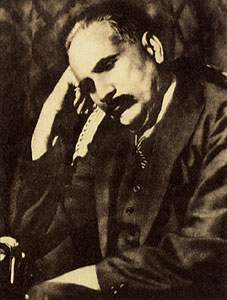
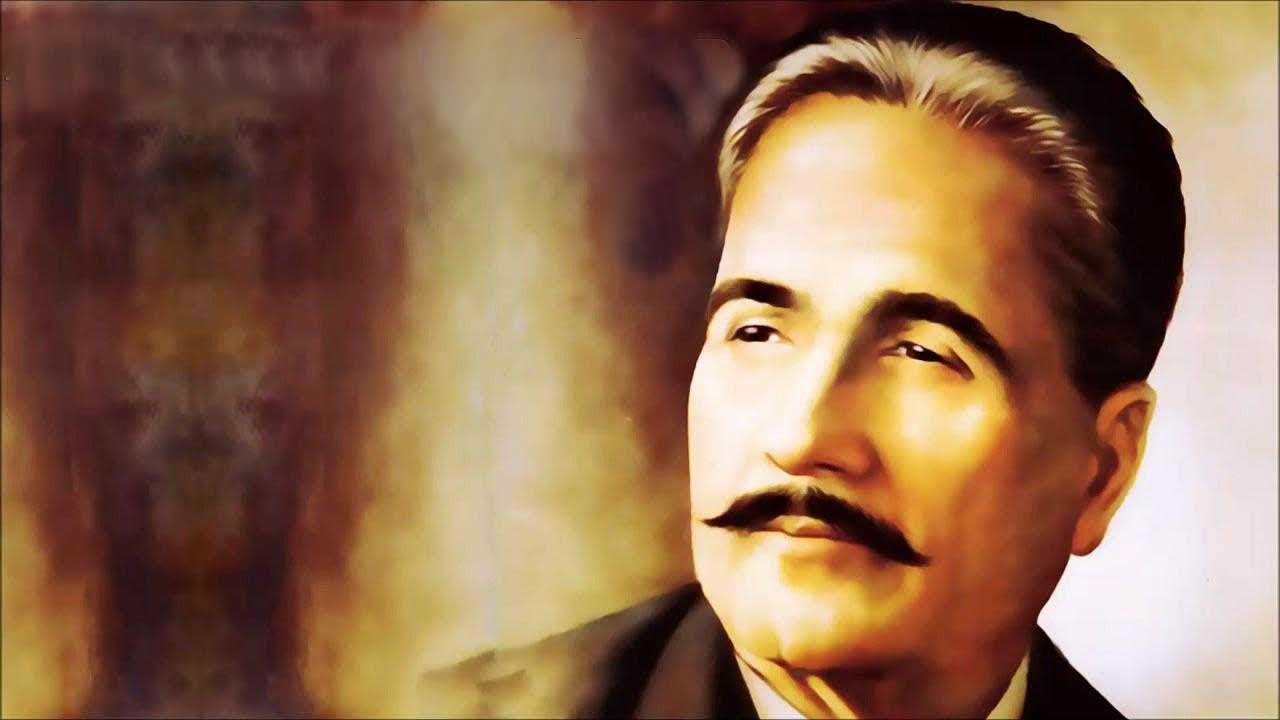
Muhammad Iqbal  (Allama Iqbal)

Sir Muhammad Iqbal (November 9, 1877 – April 21, 1938), widely known as Allama Iqbal, was a Muslim poet and philosopher. He became the national poet of Pakistan. He is also known as the poet of East. He wrote poetry in Urdu and Persian. His poetry is considered to be revolutionary. His vision of an independent state for the Muslims of British India was a starting point for the creation of Pakistan. He is commonly referred to as Dr Allama Iqbal.

Early life and education

Muhammad Iqbal was born on 9 November 1877. His father was Sheikh Noor Muhammad, who worked in a small government job but later started his own business, and his mother was Imam Bibi. Both Allama Iqbal's mother and father were very pious and religious-minded people and devoted to a simple life. After early Islamic education and then secondary at a small school in Sialkot, Iqbal was admitted to the Scottish Murray College, Sialkot, where he topped the higher secondary examinations and got a scholarship to study at the famous Government College, Lahore, for BA. On going to live in the hostel there, Iqbal met Professor Arnold, an English teacher who taught many things to Iqbal and guided him in his studies of philosophy and literature.He was very young at that time.
Early career

At that time, Iqbal also became well known as a new poet and writer. He used to go to attend the 'Mushaira' at the haveli of Hakim Syed Aminuddin, in BhaatiGate area of Old Lahore city—here, he met many famous poets and writers and also began to write good poems which became very popular. He was guided by Mirza Dagh, Mirza Gurgani, Hakim Amin uddin, Hakim Shuja uddin and Sir Abdul Qadir. His first famous poem, Koh i Himala was also printed in Makhzan magazine, owned by Hakim Shuja uddin and Sir Abdul Qadir
After doing his BA and MA from Government College, Lahore, Iqbal was appointed a professor at this same institution and after some time, in 1905, he was selected for higher studies in England and Europe. He went and studied in Cambridge University and then also law at University of London, and then he went to Munich, Germany, where he took a PHD degree. After all his study, Iqbal decided to go back and teach and also practice law in India.
Iqbal died on 21th April 1938 due to severe throat infection that lasted for long till his death. He will be remembered for good.
Aasmaan teri lahad per shabnam afshaani kare
Sabza e noorasta is ghar ki nigeh baani kare.

Allama Iqbal Poetry – Poet of the East, Allama Iqbal needs no introduction. He is the most celebrated poet, philosopher, barrister and scholar of all times. Allama Iqbal received the title of “Sir” from King George V in 1922. Apart from being the poet of the East, Allama Iqbal also enjoys the status of “Musawir e Pakistan”, “Hakeem-ul-Ummat” and “Mufakir e Pakistan”. He became the national poet of Pakistan after independence. His popular creation “Sare Jahan se Acha” became the national song of India. The birth anniversary of Allama Iqbal is celebrated as the national holiday in Pakistan. 

Regarded as the spiritual father of Pakistan, Allama Iqbal possess prominent place in the Urdu poetry and literature. Allama Iqbal poetry collections reveal his wisdom and intellectualism that had motivated the Muslims of India for struggle of freedom. Allama Iqbal shayari has been narrated in Urdu and Persian languages. Allama Iqbal Shayari in Urdu has been highly motivating and interesting for the readers in Indo-Pak. Allama Iqbal poems in Urdu is highly inspiring that ignited the love of freedom among Muslims of India. He was the first person who invoked the philosophy of Pakistan in front of sub-continent Muslims through its Urdu poetry. His first poetry book, Asrar-e-Khudi, appeared in the Persian language in 1915, and other books of poetry include Rumuz-i-Bekhudi, Payam-i-Mashriq and Zabur-i-Ajam. Amongst these his best known Urdu works are Bang-i-Dara, Bal-i-Jibril, Zarb-i Kalim and a part of Armughan-e-Hijaz. Allama Iqbal Ghazal collection include Har Ek Maqaam Se Aage Guzar Gaya Maah e Nau, Har Shai Musaafir Har Cheez Raahi, and Sitaaron Se Aage Jahaan Aur Bhi Hain to name a few.